

Macallum Tepsich
2026-07-03
Why Leaside Keeps Winning: Inside One of Toronto's Most Loved Family Neighbourhoods
Leaside is one of Toronto's most in-demand neighbourhoods. And here's why...
Why Leaside Keeps Winning: Inside One of Toronto's Most Loved Family Neighbourhoods
Every few months a client asks me some version of the same question: where in Toronto do people actually love living, not just tolerate. My answer is almost always the same. Leaside.
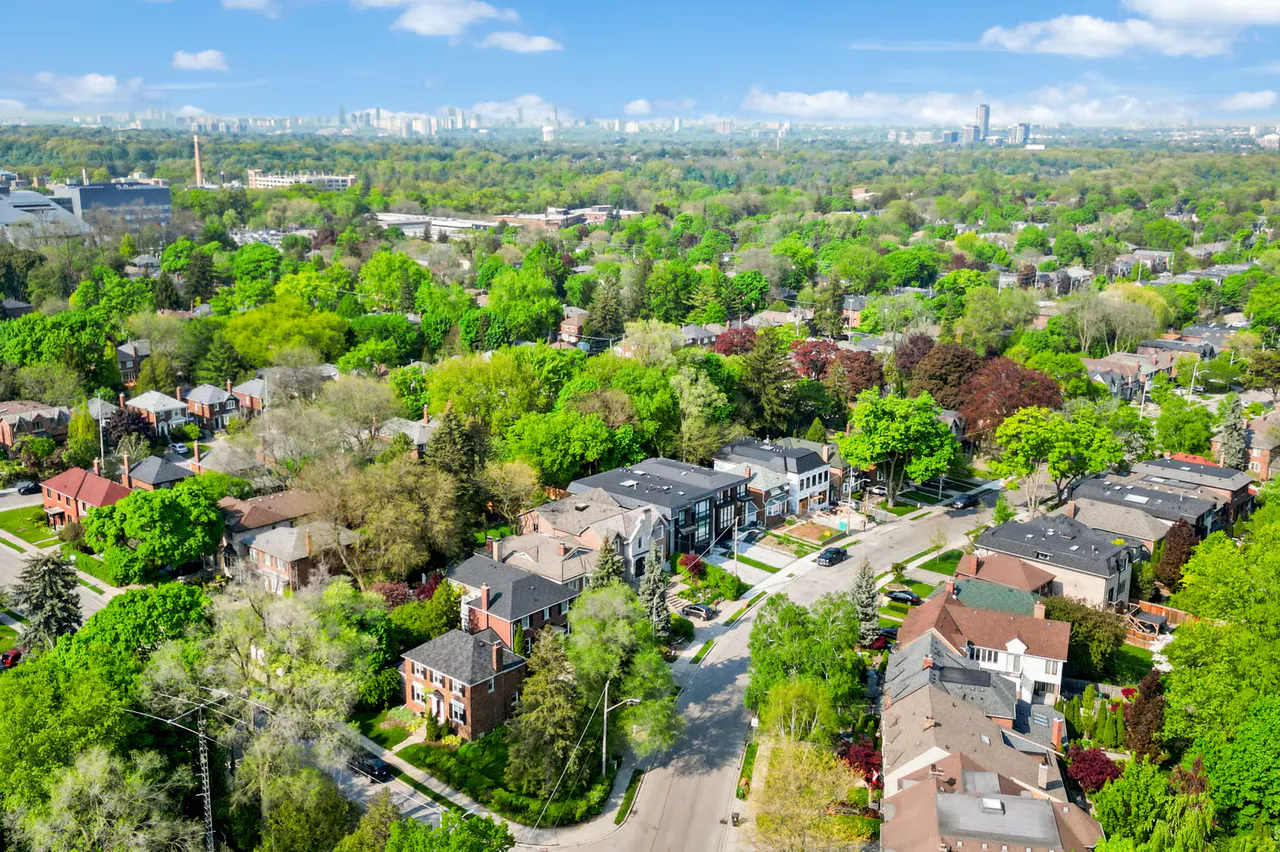
It's not the flashiest name in Toronto real estate. It doesn't have Rosedale's ravines or Summerhill's train station glamour. What it has instead is something harder to manufacture — a neighbourhood that was planned, built, and has been lived in exactly the way it was designed to be lived in for over a century. Families move to Leaside and they stay. That's the whole story, and the data backs it up.
$2.02M
Average home sale price
12–14
Average days on market
#29
of 144 Toronto neighbourhoods, by MLS® activity
A Village That Was Actually Planned to Be One
Leaside has a genuinely unusual origin story for a Toronto neighbourhood: it was the first town in Ontario laid out entirely on paper before a single house went up. The Canadian Northern Railway incorporated the Town of Leaside in 1913 on land that had belonged to the Lea family since the early 1800s, and the wide, tree-lined streets and generous lots you see today are a direct result of that original plan. Leaside merged into the Borough of East York in 1967 and became part of the City of Toronto in 1998, but it never lost the self-contained, small-town character that made it distinct in the first place.
That history matters for buyers today because it explains what you're actually purchasing. Most Leaside homes are detached or semi-detached, built largely between the 1930s and 1950s in Georgian Revival and Tudor styles, sitting on lots that are noticeably larger than what you'll find in comparable midtown neighbourhoods. Some have been lovingly maintained in their original form. Many more have been extensively renovated or rebuilt, giving buyers a genuine range — from character homes with leaded glass and cut stone, to fully modern custom builds behind a traditional facade.
LOCAL INSIGHT
Leaside's average home price currently sits well above the broader Toronto average — one of the clearest signals of sustained buyer demand in a market where many neighbourhoods are still adjusting. When inventory this good comes with lot sizes this generous, competitive offers are still the norm, not the exception.
The Schools Parents Actually Talk About
Ask any Leaside parent why they bought here and schools come up almost immediately. The neighbourhood is fed by a tight cluster of highly rated public schools — Bessborough Drive, Bennington Heights, Northlea, and Rolph Road elementary schools — all of which stream into Leaside High School at Eglinton and Bayview.
The numbers support the reputation. In the most recent Fraser Institute Report Card, Leaside High School earned an overall rating that placed it among the top 2 percent of secondary schools in Ontario, ranking 15th out of 747 schools provincewide. Bennington Heights Elementary posted a Fraser score of 9.0, with Northlea and Rolph Road close behind. Leaside High is also known citywide for its language programming, having been recognized in the past for its French, Spanish, and Italian course offerings.
Where Families Actually Spend Their Weekends
This is the part of Leaside that's hardest to capture in a listing description, and it's the part residents mention most when they talk about why they never left. The neighbourhood's recreation footprint is genuinely unusual for a fully built-out midtown community.
Parks & Recreation
Leaside Memorial Community Gardens at Millwood and Laird is the anchor — an indoor swimming pool, two ice rinks, a curling rink, and a full auditorium, all within walking distance of most of the neighbourhood.
Trace Manes Park on McRae Drive is routinely cited as having one of the best playgrounds in East York, alongside six tennis courts run by the Leaside Tennis Club, a splash pad, a baseball diamond, and a natural outdoor ice rink that runs from late December through February.
Serena Gundy Park and the adjacent Sunnybrook Park give residents direct access to 62 and 147 acres of trails, picnic space, an off-leash dog area, and horseback riding stables — all connected by walking paths into the Don Valley.
Leaside is the kind of neighbourhood people move into and build their lives around — not a stepping stone, a destination.
Bayview Avenue: The Real Reason People Never Leave
If Leaside Memorial Gardens is the neighbourhood's recreational heart, Bayview Avenue is its social one. It's a genuinely walkable, low-rise commercial strip that residents actually use daily, not just for special occasions.
Locals point to LOCAL Public Eatery for weekday lunches, sports nights, and family-friendly dinners with a rooftop patio; Adamson Barbecue on Wicksteed for Texas-style smoked brisket that regularly sells out; Grillies on Bayview for reliable takeout that keeps busy families fed; and Rahier Patisserie for French pastries that have made it a neighbourhood institution. For date nights, Kamasutra Indian Restaurant & Wine Bar and Mayrik both come up again and again in resident reviews, while La Casetta and Conspiracy Pizza cover Italian comfort food and Neapolitan pizza respectively. Cumbrae's on Bayview is the go-to for high-quality meat, and Hollywood Gelato has become the after-dinner ritual for plenty of Leaside families. A Whole Foods anchors the northwest corner of the neighbourhood for everyday grocery runs.
None of this is manufactured retail. It's mostly independently owned, and it's exactly the kind of daily-life infrastructure that turns a neighbourhood from somewhere you live into somewhere you belong.
What Leaside Actually Costs — And What You're Comparing It To
Leaside
~$2.02M avg. sale
- 28% above the Toronto average
- Predominantly detached & semi-detached
- 12–14 days on market
- Top-ranked school catchment
Rosedale–Moore Park
~$3.66M avg. price
- Toronto's highest-value pocket
- Larger, older heritage homes
- Ravine-adjacent lots
- A natural next move up from Leaside
Context matters here. Leaside's average sale price runs meaningfully below its closest comparable, Rosedale–Moore Park, while offering many of the same qualities buyers are actually paying for — good schools, mature streets, strong long-term value retention. It's a large part of why Leaside functions as a natural landing spot for families upsizing out of Davisville Village, the Annex, or a downtown condo, and why some eventually move on to Rosedale once space needs grow further.
On the broader market: TRREB reported 6,770 GTA home sales in June 2026, up 9.4 percent year over year, even as new listings fell nearly 13 percent. That combination — more sales chasing fewer new listings — is exactly the kind of tightening backdrop that tends to reward well-located, high-demand neighbourhoods like Leaside first.
The Eglinton Crosstown Factor
One more thing worth flagging for anyone weighing Leaside against other midtown options: the Eglinton Crosstown LRT is bringing new stations directly into the neighbourhood, improving east-west transit access in a way Leaside hasn't had before. Combined with quick access to the Bayview Extension and Don Valley Parkway — Leaside is roughly a 10-minute drive to the downtown core — the neighbourhood's connectivity is only improving from here, which is typically a tailwind for long-term value.
What This Means For You
If you're buying
Homes here move in under two weeks on average. If Leaside is on your shortlist, get pre-approved and be ready to move decisively — the days-on-market number isn't a fluke, it's a pattern.
If you're selling
Leaside's combination of school catchment, walkability, and lot size means presentation and pricing strategy matter more than in a neighbourhood coasting on name recognition alone. Buyers here are comparing you to Rosedale and Lawrence Park, not settling.
If you're watching from the sidelines
Leaside's fundamentals — schools, green space, walkable retail, improving transit — aren't the kind that erode when the broader market softens. It's a neighbourhood worth tracking even if you're not ready to move this year.